With the rapid development of China's economy, the application of injection molds in various industries has become increasingly mature. Many plastic parts of products require the use of injection molds, and the quality and service life of injection molds have a significant impact on the production costs of enterprises. Therefore, improving the quality and maintenance of injection molds to extend their service life is particularly important. So, what factors will affect the quality of injection molds and how to maintain them?
Injection molds will affect the final quality of injection molds from various aspects such as raw materials, design, and processing technology, which are manifested in the following aspects:
1. Mold steel
Steel is a decisive factor in the quality of molds, and selecting reasonable steel is of utmost importance. The criteria for selecting steel are:
① Requirements for Injection Molding Data
Different plastics require different types of steel, such as high polishing requirements, corrosion resistance requirements, etc;
② Price
Steel properties are good as long as they can be used, not the more expensive the better; Considering the cost factor of the mold, the steel used for the mold should be selected based on the corresponding information of the mold's lifespan to prevent unnecessary waste; The lifespan of typical P20 data is around 300000; 2738 data is fine at 500000, while H13/2344 is usually above 800000 to 1000000, and can be selected according to the situation;
③ Appearance treatment
The surface treatment of the mold is also very important. Nitriding can enhance the surface hardness of steel and effectively extend the lifespan of molds; Electroplating can effectively modify mold steel, and can be used to enhance and improve the functionality of steel for some plastic parts that require high brightness and corrosion resistance.
2. Structural design
A mature mold structure not only considers the characteristics of product data, such as shortening rate, molding temperature, and elastic tensile deformation coefficient, but also takes into account the cooling water circuit and the speed of mold opening and closing. A reasonable mold structure can effectively extend the lifespan of the mold, ensure smooth production, improve efficiency, and reduce costs.
3. Mold processing
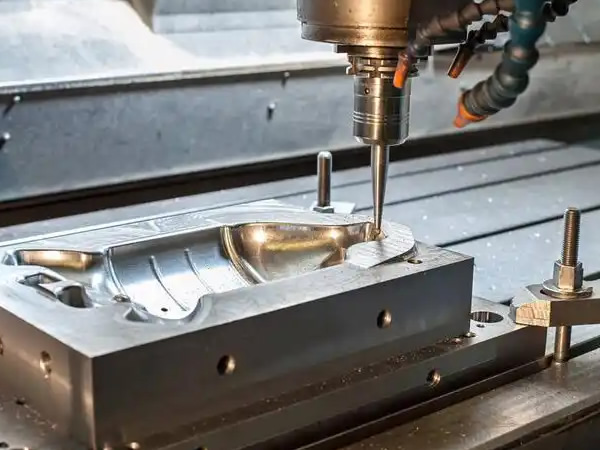
Sharp tools make good work. The organization of mold technology is particularly important. Reasonable process organization can accelerate production cycles, shorten processing time, and effectively save costs. And more importantly, precise and reasonable processing can ensure the stability and extended lifespan of the mold during the production process. Processing errors can lead to mold welding, and no matter how well the welding is done, it is a loss for the mold; Poor processing in other areas may also affect the movement of the mold, reduce its lifespan, and cause the mold to crack or even break during the production process.
4. Standard components
The lowest wooden bar determines the capacity of the water bucket. We all understand this principle, but we often fail to notice it when doing it. The same goes for molds. Although standard parts do not directly participate in molding, they control the operation of the entire mold. Good standard parts should be wear-resistant, hard enough, have high precision, and not deform. The price difference between standard parts of different brands is significant, so when making molds, don't blindly bargain. Kill and kill, your molds will drop from running to mass market.
5. Collision (Flying Model)
The collision relies on the experience of a mold fitter, and what may seem like a simple task is actually the most technically demanding job. The first thing to consider when dealing with messy molds is this skill. The flat mold is the simplest, and the fractal surface only needs to have no flying edges or breaks, which is basically okay. Car accessory molds are very troublesome, not only because their fractal surfaces are relatively irregular, but also because they often contain multiple sliders and top blocks. Through collision, other issues with the mold can be improved and perfected, making it a comprehensive task.
6. Polishing/Leather Texture
The polishing of the mold is the final step in the production of the mold. Polishing is directly reflected on the plastic parts, so it is the most dignified job. Polishing can also help and compensate for mold movements, especially for demolding. Often, the production of some molds is not smooth due to inadequate polishing, excessive resistance, difficult demolding, and even top whitening, top cracking, etc.
7. Mold device
The mold device is like assembling a machine, where every component and screw must not make mistakes. Otherwise, the result can be quite serious, ranging from minor product defects that affect production to complete damage to the mold and render it useless. So the operation of the device must be very detailed. During the installation process, special attention should be paid to the cleaning of the mold, especially the waterway and screw holes, and the iron filings inside must be blown clean.
8. Warm channel or cold channel
This actually has the least impact on the quality of the mold, because the warm runner is usually designated by the customer's brand, especially for some large customers. Famous foreign brands have done a great job in both quality and after-sales service, so there are generally no quality issues. However, the quality of some domestic warm air ducts varies greatly. A single small business, in order to save costs and compete for price advantages, uses unreliable heating and conduction accessories, which easily leads to problems. The primary issue with the cold runner is how to ensure the balance of injection molding, gate size, injection pressure, and so on.
9. Cooling water circuit
Anyone who has experience with molds knows how important cooling is for a mold. Due to the increase in prices and labor wages, it is impossible to imagine the profits brought by not cutting a single second of injection molding cycle during mass production of products. However, speeding up the production cycle will also result in an increase in mold temperature. If not effectively controlled, the mold will become too hot to form, leading to deformation, failure, and even invalidation. So excellent waterway design is particularly important, including the density, diameter, and connections between waterways.
Maintenance and upkeep of injection molds
Mold maintenance is primarily focused on the maintenance and upkeep during the production process. Molds are like cars, and if they are not maintained for a long time, they may become obsolete. So every time the mold is used, comprehensive maintenance should be carried out, especially the rust prevention of the molding part, and the rust prevention of the primary moving parts. Because the mold needs to be exposed to water during the production process, it may get stuck on the mold during installation or disassembly. Therefore, it is necessary to ensure that the mold is dry and then apply a layer of oil for maintenance.
1、 The use of injection molds
Molds create value during use, but gradually lose their own value during use. Therefore, operators must attach great importance to the use of molds and generally pay attention to the following issues.
(1) Before use, check all parts of the mold for impurities and dirt. Any remaining plastic or impurities in the mold should be cleaned with cotton yarn, and firmly bonded adhesive should be scraped off with a copper knife.
(2) Reasonably choose the locking force, based on the absence of burrs during product molding. Do not assume that higher is better, as it will increase power consumption and easily damage transmission parts.
(3) Each transmission part should receive good lubrication, therefore, it is necessary to maintain lubrication in these parts.
(4) It is not allowed to use heavy objects such as Langtou to strike any parts in the mold, in order to avoid deformation or even damage to the mold.
2、 Maintenance of injection molds
(1) Maintenance of cooling water channels
The function of the cooling water channel is to cool and solidify the plastic parts in the mold cavity through cooling water, which has a significant impact on the molding process of the plastic parts.
1. The hazards of blocked cooling water channels
During long-term operation, the surface of the cooling water channel is prone to deposit scale, dirt, rust, etc., which will reduce the flow area of the cooling water channel and greatly reduce the heat exchange between the cooling water and the mold, greatly reducing its cooling effect and posing great harm.
2. Inspection of Blockage in Cooling Water Channels
The increase of sediment on the surface of the cooling water channel can cause local blockage of the channel, which can be determined by measuring the flow velocity of the cooling water channel to assess its internal condition. When measuring, a pressure control valve can be installed between the mold and the cooling water channel to measure the pressure drop of the cooling water passing through the mold under the same conditions. This can determine the blockage of the cooling water channel. If the blockage reaches a certain level, it should be cleaned up in a timely manner.
3. Cleaning of cooling water channels
Due to the design of the cooling water channel being related to the shape of the cavity, its shape is winding and difficult to disassemble. Therefore, it cannot be cleaned by mechanical methods and can only be rinsed with cleaning agents to remove adhered dirt under the strong impact of the cleaning agents. There are various cleaning agents available for selection.
(2) Maintenance of Injection Mold Unloading
After completing the given production task, the injection mold needs to be disassembled from the injection molding machine. When disassembling, carefully remove residual plastic and use different cleaning methods according to the different properties of different plastics. Generally, soapy water can be used to remove residual plastic and other deposits inside the mold, and then the mold can be air dried. If there are rust spots on the surface of the mold cavity, they should be removed, polished, and then coated with lubricant for protection before being stored in the warehouse.
3、 Malfunctions and Troubleshooting of Injection Molds
During the working process of injection molds, there will always be some malfunctions to varying degrees, which have adverse effects on product quality, productivity, molds, etc. The following will discuss them in detail.
(1) Mold deformation and its elimination
Mold deformation refers to excessive elastic or plastic deformation of the mold during working engineering, which makes the mold unable to work normally or the product quality unqualified. The reasons and elimination methods are as follows.
1. Insufficient rigidity
During injection molding, the mold is subjected to enormous holding pressure. If this pressure causes permanent deformation of the mold, it will be unusable. However, even within the elastic limit, the deformation generated by the mold can be restored. However, the solidification molding during deformation will make it difficult to open the mold, or even impossible to open. When this situation occurs, it is no longer possible to structurally modify the mold, but it is possible to reduce the injection pressure appropriately or add a frame from the outside to enhance rigidity. Although it may not look good, it can still be used.
2. Mold assembly misalignment
If the mold assembly is improper, such as poor alignment of the mold, inaccurate alignment of the mold's clamping and joint, it can cause uneven filling of the melt mold, which can easily lead to deformation or misalignment of the mold. For this, the mold should be reassembled, and sometimes the method of correcting the gate can also be used to correct the unbalanced filling of the mold.
(2) Damage to the cavity and its elimination
The mold cavity is the place where plastic parts are formed, and its damage will directly affect product quality. Mold cavity damage is a hard injury on the surface of the mold cavity, causing defects such as scratches, pits, and cracks on the surface. The reasons for these damages and their elimination methods are as follows.
1. Hard object damage cavity
Sometimes it is difficult to remove plastic parts after mold opening, so hard tools such as screwdrivers are used to force them out, which can easily damage the mold cavity. In addition, after opening the mold, accidentally dropping hard objects such as wrenches and hammers into the mold cavity can cause damage to the cavity.
2. Improper operation
If the plastic part is closed before being removed, especially during automatic molding, the solidified plastic part is prone to damage the mold cavity and mold.
3. Repair of Damage
After cavity damage, it is difficult to continue working without repair. There are several methods for repairing the cavity.
(1) Welding. Welding is a commonly used repair method, and the most commonly used welding method is gas welding. If electric welding is used, due to the high temperature, the mold is prone to deformation and even cracking. Electric welding repair should be used, and the mold should be preheated and heat treated after welding.
(2) Embedded components. For damages with small areas and deep depths, embedded repairs can be added, usually by drilling holes and then inserting the embedded parts. When drilling, be careful not to drill through the cooling water channel and screw holes. The fit between the insert and the cavity should be tight, and then polished smooth after installation.
(3) Electroplating. For defects with a depth less than 0.5mm, electroplating is a better method of repair, which can be copper plating or chrome plating.
(4) Tap. For cavities with softer materials, a blind hole can be drilled on the back of the damaged area, and then the bottom of the blind hole can be tapped to create a protrusion from the damage; Or strike the concave part 3mm away from the damaged area to make it protrude, and then grind, grind, and polish the protruding part.
(3) Rust of mould and its elimination
Injection molds are often made of tool steel and encounter substances such as corrosive gases and water that can cause rust during operation. Plastic parts made from rusty molds will have quality issues, so they need to be eliminated.
1. Gas produced by melt decomposition
Some raw materials produce volatile gases when heated, and many raw materials also produce volatile gases when overheated. These gases are often corrosive and diffuse around the machine. When the mold is not working, they will corrode the mold. When the machine stops working, use a soft cloth to clean the mold and close it. If it is not used for a long time, spray anti rust agent in the mold cavity. When closing the mold, apply butter and block the gate.
2. Cooling water in the mold
There is more cooling water in the mold to wake up the cooling, so there is more water vapor around the machine. If the mold is cooled below the dew point, the moisture in the air will form water droplets on the surface of the mold. If not wiped off in time, it is easy to rust. Especially after the mold stops working, condensation water will quickly form. Therefore, do not stop molding easily. Even if you want to stop, turn off the cooling water and dry the mold.
3. Carbides generated during molding
After working for a long time, the mold will precipitate and decompose into carbides in the forming material, which often cause wear, corrosion, or rusting of the mold. If carbides are found to have formed, they should be immediately wiped off and wiped clean with a dry cloth.
In summary, in order to reduce the production cost of injection molds for the entire enterprise, it is necessary to focus on both the quality and maintenance of injection molds in the later stage, improve the service life of the entire injection mold, thereby achieving a reduction in product costs and enhancing the overall market competitiveness.






 Your location: